

May 21, 2026
The WISDOM Network and OCEMR engagement team recently delivered a series of three engaging Breakfast Talks at Cheney School in collaboration with The Rumble Museum. The sessions were held on Friday mornings for students aged 11 to 18 and each included a short presentation with time for questions. The focus was to connect young people with research from the Oxford Centre for Emerging Minds Research (OCEMR), making mental health research accessible, relevant, and engaging through interactive discussion and lived experience.
The first session, delivered by Sakshi Rajesh, welcomed 37 students and explored the topic “Why we enjoy things and what happens when this goes quiet?” The talk focused on enjoyment, motivation, and how these experiences can change in relation to mental health. Students responded positively to the relatable and thoughtful content, with feedback including: “I could connect with it,” “I enjoyed the whole of it,” and “interesting, relevant, thoughtful.” The session sparked meaningful discussion and set a strong and engaging start for the series.
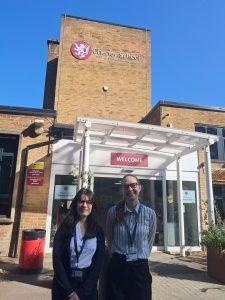
The second Breakfast Talk, “Autism, Strengths, and Zines,” was delivered by Daniela Krouzkova and Riona Nothard and attended by 30 students. The session introduced a strengths-based approach to autism and showcased creative research methods such as zine-making. Students particularly valued hearing lived experiences from autistic and ADHD individuals, with one participant commenting that they had “found a new way to understand autism.” Another appreciated “seeing things made by people with autism and hearing what they had to say.” A video from Charlie Kelman introducing the All About Me Young People’s Advisory Group also helped inspire further discussion and engagement.
The final session, “The Museum of Mental Health in the Media,” was delivered by Isaac Winterburn and attended by 39 students. The talk explored portrayals of OCD in film and television, encouraging students to think critically about representations of mental health in the media. Students contributed thoughtful observations and ideas throughout the session, with one describing it as the “best talk I’ve been to.” Dr Lorna Robinson, Rumble Museum & Cheney School, praised the session as “fascinating and powerful,” noting the high level of student engagement and reflection.
Across all three talks, students demonstrated strong enthusiasm for the topics and a willingness to engage in open discussion around mental health and neurodiversity. The programme highlighted the importance of creating accessible and interactive opportunities for communities to connect with current research, while reinforcing WISDOM’s commitment to widening participation and building meaningful relationships between researchers and the communities they serve. Thanks are owed to Anne Langford and all of the researchers for their time and enthusiasm to make these sessions a possibility.